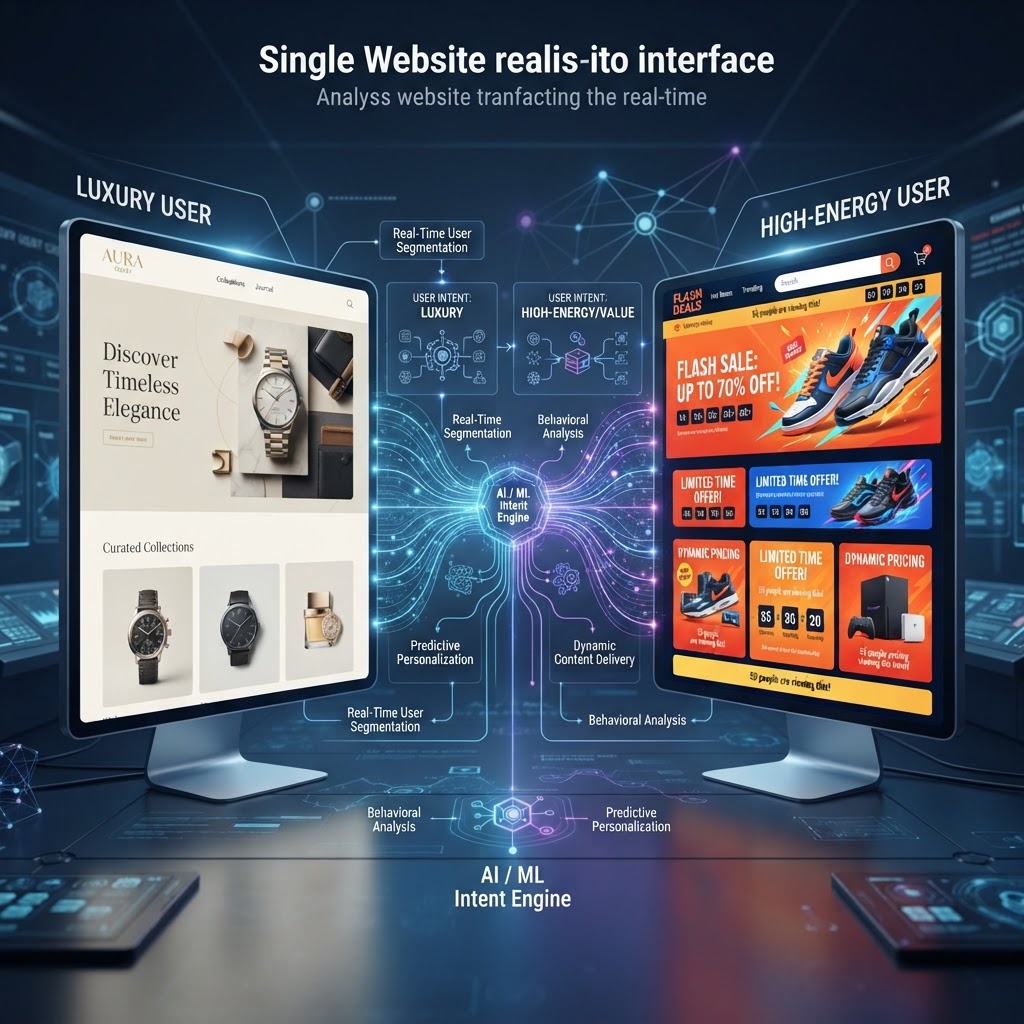
The New Standard of Digital Experience: The Efficiency of Intent
For years, marketing managers and e-commerce site owners have relied on demographic segmentation to guide their website personalization strategies. We grouped users by age, location, and gender, hoping that these broad categories would correlate with purchasing behavior. However, as the digital landscape matures, these static buckets are proving insufficient. According to McKinsey & Company, companies that excel at personalization generate 40% more revenue from those activities than average players. The differentiator in 2024 is no longer just knowing who the customer is, but understanding what they are doing in the exact moment they land on your site. This is the shift from demographic segmentation to real-time behavioral targeting, a move powered by advanced AI marketing and the core philosophy behind 1976 PE.
The Death of Demographics: Why Real-Time Intent Wins
Demographic data tells a story of the past, but behavioral targeting tells the story of the present. A visitor might be a 35-year-old male in Chicago (demographics), but if he is currently browsing high-end espresso machines and comparing warranty pages, his intent is clear: he is a high-intent researcher nearing a purchase decision. Traditional segmentation might bucket him with other 'Midwest Males,' missing the urgency of his current session. By leveraging machine learning, 1976 PE identifies these micro-behaviors—scroll depth, mouse movement, and page sequence—to deliver content that meets that specific intent. This 'efficiency of intent' reduces the cognitive load on the user, presenting them exactly what they need before they even realize they need it.
The Self-Optimizing Loop: Moving Beyond Manual A/B Testing
Historically, conversion rate optimization (CRO) was a manual, labor-intensive process. Growth hackers would develop a hypothesis, design two versions of a page, and wait weeks for statistically significant results. This process is inherently reactive. HubSpot’s 2024 State of AI in Marketing report highlights that the most successful teams are moving toward automated, continuous optimization. AI-driven website personalization transforms the static A/B test into a self-optimizing loop. Instead of testing one element at a time, 1976 PE utilizes machine learning to test thousands of permutations simultaneously across different user profiles. The system learns in real-time which hero image, CTA button color, or product recommendation drives the highest propensity to buy for a specific individual, adjusting the site architecture on the fly. This removes the guesswork for marketing managers, allowing them to focus on high-level strategy rather than individual button colors.
Thriving in a Cookieless Future with First-Party Data
The impending phase-out of third-party cookies has sent shockwaves through the industry. However, for those focused on behavioral targeting, this is an opportunity rather than a threat. The future of personalization lies in first-party data—the information collected directly from your visitors' interactions with your own site. Gartner predicts that by 2024, AI's impact on marketing strategy will necessitate a total pivot toward transparent, consented data utilization. 1976 PE is designed for this reality. By analyzing how a user interacts with your brand in real-time, the engine builds a 360-degree view of the customer journey without relying on intrusive cross-site tracking. This not only ensures compliance with GDPR and CCPA but also builds brand trust. Users are increasingly willing to share their data if it results in a demonstrably better, more personalized shopping experience.
Hyper-Personalization at Scale: Democratizing the Enterprise Advantage
Until recently, the level of personalization seen on sites like Amazon or Netflix was reserved for enterprises with massive engineering budgets and dedicated data science teams. Mid-market e-commerce sites were often left with 'one-size-fits-all' templates. 1976 PE changes this dynamic. As a drop-in engine, it provides growth hackers with enterprise-level customization without the need for a total site overhaul or heavy dev-ops involvement. Whether it is adjusting the homepage layout for a returning VIP customer or offering a real-time discount code to a visitor showing exit intent, these tools allow smaller brands to compete on the level of customer experience. This reduction in bounce rates is achieved through precision; when a user feels that a website understands their needs, they are significantly more likely to stay and convert.
Navigating the Risks: Ethics, Silos, and the Uncanny Valley
While AI offers unprecedented power, it must be wielded with professional care. One of the primary risks is falling into the 'uncanny valley' of personalization—where a website feels too intrusive, making the user feel watched rather than helped. Effective personalization should be subtle and assistive. Furthermore, marketing managers must be wary of data silos. If your AI engine cannot see the full customer journey—from the initial ad click to the final customer support interaction—the personalization will be fragmented. 1976 PE addresses this by integrating with existing tech stacks to ensure a unified data stream. Finally, compliance is non-negotiable. Robust encryption and clear opt-out mechanisms are essential to maintaining the professional standard that modern consumers and regulators expect.
Conclusion: From Static Sites to Living Conversion Machines
The transition from basic segmentation to real-time intent is the most significant evolution in digital marketing since the advent of social media. By moving away from static demographics and manual testing, brands can finally achieve the efficiency of intent, responding to individual visitors with surgical precision. 1976 PE provides the data-driven framework necessary to turn your website into a living, breathing conversion machine that optimizes itself while you sleep. Are you ready to stop guessing what your segments want and start responding to what your visitors are doing right now? Request a Demo today and see how 1976 PE can transform your e-commerce growth strategy.